

Schedule a call Click here

Give missed call to buy +91-9980970424
Contact Us

For NRI Customers
(To Buy a Policy)


(If you're our existing customer)

For Online Policy Purchase
(New and Ongoing Applications)
Branch Locator

For Existing Customers
(Issued Policy)
Fund Performance Check
Login
 Customers

 Employees
 Partner



Types of Electronic Funds Transfer in India
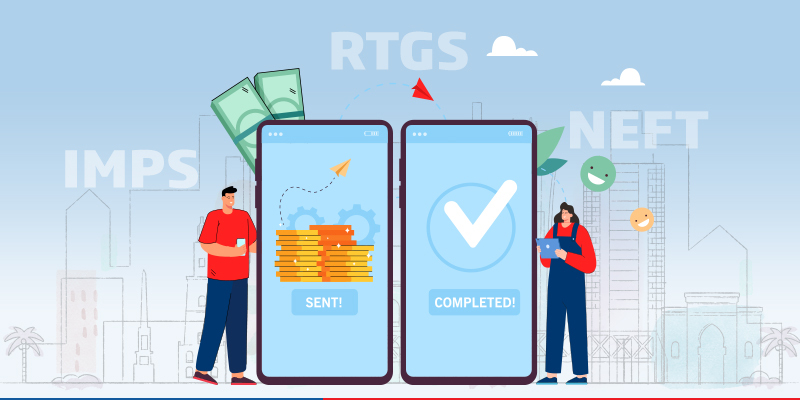
Following are the various types of electronic fund transfers in India:
- Electronic fund transfer through IMPS: IMPS or the Immediate Payment Service is the type of electronic fund transfer that comes in handy when money has to be transferred immediately to the beneficiary account. IMPS facility can be availed even on bank holidays or weekends when the offline banking operations are closed. The transfer can be done through ATMs, mobile phones or using standard net-banking. This facility is open around the clock and gives customers access to electronic fund transfer at all times. The details that are needed are- Name and account details of the beneficiary, MMID (Mobile Money Identifier) number of the beneficiary, IFSC code of the beneficiary, the amount etc.
- Electronic fund transfer through RTGS: RTGS or Real Time Gross Settlement is the mode of electronic fund transfer wherein a minimum of Rs. 2 Lac can be sent to a beneficiary's account. The branches through which RTGS is to be done (i.e. both the sender as well as the receiver's branches) must have the facility of RTGS enabled to be able to carry out the transactions. There is a particular duration for RTGS and the transferred amount takes about 30 minutes to be deposited in the beneficiary's account. The details that are needed for RTGS are - name and account details of the sender, name of the beneficiary, account details of the beneficiary, IFSC code, amount to be transferred etc.
- Electronic fund transfer through NEFT: NEFT or National Electronic Fund Transfer is the most commonly used electronic fund transfer medium in India. Depending on the amount to be transferred, banks may charge Rs 2.50 to Rs 25 for the transaction. NEFT facility can be availed of only during the working hours of the banks and remains closed during bank holidays or weekends when the banks are not functional. There is no upper capping on the amount that can be transferred and the details required are- beneficiary's name and account details, IFSC code of the beneficiary's bank branch etc.
HDFC Life offers numerous term insurance plans that have been formulated for a complete financial security of your loved ones and for ensuring that their future stays protected at all times, even in your absence. For details, click on the mentioned link: https://www.hdfclife.com/term-insurance-plans.
 Term Plan Articles
Investment Articles
Tax Articles
Retirement Articles
ULIP Articles
Subscribe to get the latest articles directly in your inbox
Health Plans Articles
Child Plans Articles
Popular Calculators
 Francis Rodrigues
Francis Rodrigues has a decade long experience in the insurance sector, and as SVP, E-Commerce and Digital Marketing, HDFC Life, manages the online sales channel, as well as digital and performance marketing. He has had hands-on experience in setting up sales channels and functional teams from scratch over a career spanning 2 decades.

 Written By:

HDFC Life
Reviewed by Life Insurance Experts
HDFC LIFE IS A TRUSTED LIFE INSURANCE PARTNER
We at HDFC Life are committed to offer innovative products and services that enable individuals live a ‘Life of Pride’. For over two decades we have been providing life insurance solutions - protection, pension, savings, investment, annuity and health.

Popular Searches
- Best Investment Plans
- What is Term Insurance
- 1 Crore Term Insurance
- Short term saving plan
- Saving plans
- ULIP Plan
- Health Plans
- Child Insurance Plans
- Group Insurance Plans
- Long Term Savings Plan
- Fixed Maturity Plan
- Monthly Income Advantage Plan
- Pension Calculator
- BMI Calculator
- Compound Interest Calculator
- Term insurance Calculator
- Tax Savings Investment Options
- 2 crore term insurance
- 50 lakhs term insurance
- annuity plans
- Investment Calculator
- get pension of 30000 per month
- ULIP Returns in 5 Years
- investment plan for 5 years
- investment plan for 10 years
- 50-Lakh Investment Plan
- guaranteed returns plans
- sanchay plans
- Pension plans
